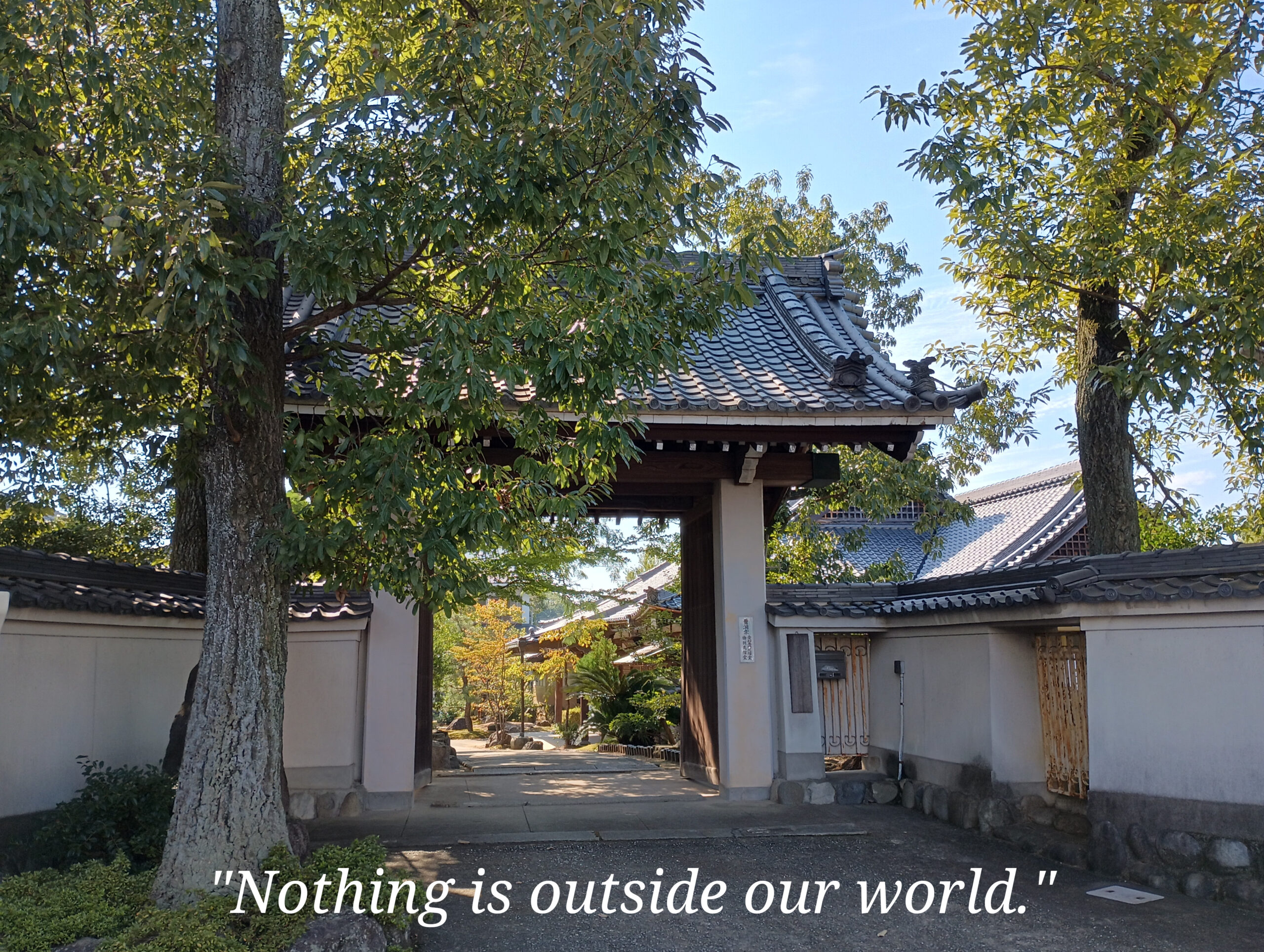
Following a six-week training period at Aichi Senmon Niso-do Shoboji in Nagoya, Japan, Soshin returned to share her experiences under the guidance of Tesshin Roshi.
Preparing for the Monastery
Before departing, Soshin prepared by reading Paula Arai’s Women Living Zen and consulting with two women who had previously trained at the nunnery. Each had described the rigorous reality of the monastery, where the urge to leave often arises within the first few days.
The monastic rhythm begins each morning by 4:00 a.m. Within fifteen to twenty minutes, trainees are dressed, washed, and seated in the zendo for zazen. Afterward everyone is busy for 1-2 hours wiping down temple floors with time-worn cloths and other temple maintenance samu physical work. Soshin noted that the combination of intense physical exertion, heat, humidity, and jet lag created an initial shock.
Yet, by the two-and-a-half-week mark, a profound shift took place. As Soshin submitted fully to the traditional training, personal preferences and ego fell away. She found herself washed in joy, happily scrubbing pots and pans in the kitchen without resistance.
Life Inside Aichi Senmon Niso-do
Navigating monastic life presented a language barrier, as Soshin arrived knowing only a handful of Japanese words. However the head teacher, Zuiko Roshi, spoke English along with several practitioners. Over time, the other nuns began teaching Soshin practical kitchen phrases, such as aratte kudasai (“please wash”) and fuite kudasai (“please dry”). Soshin also became familiar with everyday monastery elements, including katori senko, the traditional spiral incense burned as a mosquito deterrent.
The monastery grounds were striking, with sculpted trees reminiscent of traditional Zen landscape paintings in that it was surreal and picturesque. Time inside the monastery was measured not by days of the week, but by the calendar date. There were several elaborate ceremonies such as those honoring temple and lineage ancestors with the nuns performing intricate routines. Ritual schedules operated strictly according to dates ending in specific pairs of numbers:
- Dates ending in 4 and 9: Head shaving of each other took place with traditional bathing with buckets afterward, while zazen was omitted.
Presently, only six resident nuns live and practice at Niso-do—a noticeable contrast to past decades when forty to fifty women trained there simultaneously.
The Daily Schedule
In response to an inquiry from Tesshin Roshi, Soshin outlined the typical daily schedule:
- 3:50 a.m. Shinrei – Wake up, bells ring temple-wide at 4:00 a.m.
- 4:10 a.m. Kyoten – Morning Zazen, be seated by 4:10 a.m. for 4:15 a.m. start to a 45-minute sitting.
- 5:00 a.m. Choka – Morning Service, an intricate choreographed ceremony before the butsudan involving offerings, and roughly half a dozen chants.
- 6:00 a.m. Samu – Cleaning Work, about an hour and a half of physical labor to clean the temple. Strict distinctions are observed between jyokin (hand cloths used strictly above floor level) and zoukin (floor cloths).
- 7:30 a.m. Shuku – Breakfast, formal oryoki meal, frequently featuring kayu (rice gruel). The food was diverse and wholesome, supported largely by donations from former graduates and the local community.
- 8:15 a.m. Samu – Finish morning Samu tasks, then help all others with completing theirs.
- 9:30 a.m. Rest Period
- 10:00 a.m. Samu – Help as needed with kitchen meal prep, front grounds sweeping, or any other ever-changing temple maintenance tasks.
- 11:30 a.m. Rest Period
- 12:00 p.m. Saiza – Lunch, formal oryoki meal, frequently featuring kayu (rice gruel). The food was diverse and wholesome, supported largely by donations from former graduates and the local community.
- 12:45 p.m. Samu – After lunch, cleaning and drying dishes while organizing and maintaining the kitchen.
- Rest Period
- 3:00 p.m. Ocha – Tea time with traditional sweets.
- 4:00 p.m. Banka – Evening service, shorter than morning service.
- 5:30 p.m. Yakuseki – Dinner, formal oryoki meal, frequently featuring kayu (rice gruel). The food was diverse and wholesome, supported largely by donations from former graduates and the local community.
- 6:15 p.m. Samu – After dinner, cleaning and drying dishes while organizing and maintaining the kitchen.
- 8:10 p.m. Yaza – Evening zazen (held when duties permitted), be seated by 8:10 p.m. for 8:15 p.m. start to a 45-minute sitting.
- 9:00 p.m. Kaichin – Lights out.
Transcending Non-Attachment: The Practice of Food
A significant part of Soshin’s training involved food. Having adhered to a vegetarian and then vegan diet for over thirty years, Soshin had begun slowly reintroducing animal products three years prior in preparation for monastic life in Japan. Monastic discipline requires receiving whatever offering is given during takuhatsu (begging) or communal meals with full gratitude, without dualistic aversion or ego opinion.
Soshin read an excerpt from her personal journal recorded on her first full day, September 3rd:
Within minutes of meeting Abbess Aoyama Roshi at lunch, an amazing woman in her 90s who paved paths for Zen Buddhist women in a time when we were largely considered ‘lesser than’ and who authored 50-plus books, I found myself in a small group of nine women eating an oryoki meal that included fish on the bone.
At 50 years old, having not had fish since I was 16, that is 34 years. Roshi’s most turning of turning phrases comes to mind: “If you’re going to be entering this temple, you can’t be anything. This is dualistic. This is divisive. We don’t deny. Nothing is outside our world.” This still continues to literally change my life all the time.
Taking one glance down at the plate with an about 5-inch by 2-inch piece of fish, with nothing at all covering it or hiding it or masking it like the shrimp covered in white rice was, immediately I knew what had to be done, and it was sort of like machinery took over and did it for me. The very soft brownish gray pieces fell from the central spine bone easily with the hashi chopsticks, and without looking up or making any type of expression, I ate fish today. It is what it is. I do not have an opinion about it.
At the end of that first meal, Soshin quietly introduced herself. Zuiko Roshi translated for Abbess Aoyama Roshi, who noted her own past visits to the United States. When Soshin expressed her profound gratitude and mentioned reading Aoyama Roshi’s work Zen Seeds, the 93-year-old Abbess conveyed regret that her health prevented her from sitting zazen with Soshin. Moved, Soshin made a full prostration in tears, met by the Abbess’s warm smile.
Ritual Arts: Baika and Sewing
Soshin engaged in traditional arts that accompany Soto Zen monastic practice. On her first evening, Zuiko Roshi brought an instrument kit wrapped in brocade silk to practice for an upcoming ceremony. The practice involved a handheld bell, long wooden mallet, and flat metal chime disk using deliberate, coordinated movements synchronized with liturgical chanting. Tesshin Roshi noted that this practice is baika, a musical hymn tradition cultivated largely within Soto Zen women’s sanghas.
Soshin also took sewing instruction. After completing a hashibukuro (chopstick pouch for oryoki), she began hand-stitching a rakusu from pre-cut pieces with stitch sizes refined by translated guidance from the decades-trained skilled sewing teacher.
Tesshin Roshi on the Nature of Practice
Reflecting on Soshin’s account, Tesshin Roshi observed that anticipation is often harder than the practice itself. He drew from his own solitary training at Tetsugyuji in the cold mountains of Japan:
Tesshin shared how he had initially struggled with isolation and the bitter winter cold. Yet, sitting directly with that intense loneliness without running away revealed its true nature: loneliness is mu—fundamentally empty. Through that realization, isolation dissolved into profound connection with the surrounding world, from the singing birds to the bamboo. Tesshin emphasized that releasing ego allows a practitioner to enter a state of natural flow, praising Soshin’s willingness to surrender completely to the training.
Deepened Concentration and Stillness
During a closing question-and-answer period, Soshin addressed the effect of being completely disconnected from outside technology, phones, and email for six weeks.
Her stay was intentionally bookended by two three-day sesshins. With every decision predetermined—from the food eaten to the clothes worn and the tasks assigned—the mind was relieved of perpetual decision-making. Soshin discovered that this environment drastically deepened her concentration. Where entering settled meditative stillness previously took twenty to thirty minutes of zazen, she found herself able to enter that stillness within ten minutes, carrying a lasting calm back into daily life.
In closing, Tesshin Roshi highlighted that spiritual journeys are never made alone, acknowledging the vital support of sangha, family, and ancestors. Soshin concluded by offering gratitude to her supporters and to her namesake, Maura Soshin O’Halloran, who are all mentioned in daily journal entries. These contain stories of ever-changing challenges and adventures that she would be delighted to share with anyone who asks.
Leave a Reply